En
En
 CN
CN
 AR
AR
 NL
NL
 FR
FR
 DE
DE
 HI
HI
 IT
IT
 JA
JA
 KO
KO
 PT
PT
 RU
RU
 ES
ES
 ID
ID
 VI
VI
 TH
TH

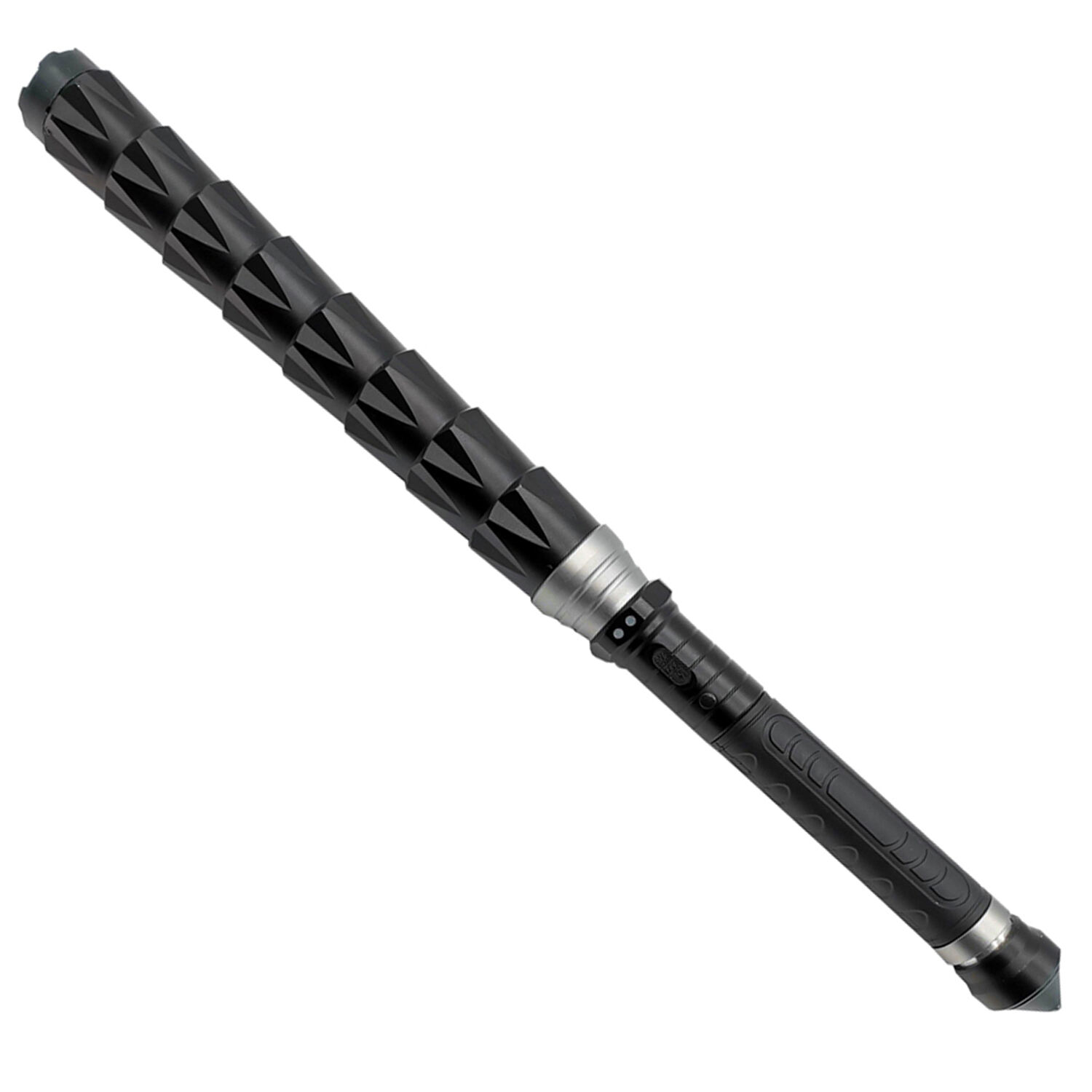
What Is the Difference Between Stun Gun and Stun Baton?
Subtitle:
Understanding key differences to choose the right product for your market and applications
When sourcing self-defense equipment, many buyers often confuse stun guns with stun batons. While both are non-lethal devices designed for personal protection and law enforcement, their structure, function, and application scenarios are quite different.
Understanding these differences is essential for importers, distributors, and procurement officers who need to select the right products for their market or projects.
At first glance, stun guns and stun batons may appear similar because they both use electric shock as a deterrent. However, their design purpose and user scenarios clearly set them apart.
One of the most important differences lies in their design and form factor.
A stun gun is typically compact, lightweight, and easy to carry. It is commonly used for civilian self-defense and is designed for close-contact situations. Many modern stun guns also integrate additional features such as flashlights, USB charging, and compact ergonomic designs, making them suitable for everyday carry and personal safety.
In contrast, a stun baton is larger and more robust. It combines the function of a traditional baton with an electric deterrent system. This dual-purpose design allows users not only to defend themselves with electric shock but also to maintain distance and control situations physically.
Another key difference is their application scenarios.
Stun guns are widely used in:
- Personal self-defense
- Security personnel
- Outdoor and emergency situations
Stun batons, on the other hand, are more commonly used in:
- Law enforcement
- Security patrol
- Crowd control
- Government and institutional use
Their extended length provides a clear advantage in maintaining a safe distance, which is critical in professional environments.
The material and structural design also differ significantly.
High-quality stun batons are usually made with:
- Aircraft-grade aluminum alloy bodies for durability
- Reinforced internal structures for impact resistance
- Integrated lighting systems for visibility in low-light conditions
Meanwhile, traditional rubber batons (non-electric) are designed differently. They often feature:
- Rubber outer layers combined with steel tube or spring cores
- Balanced weight distribution for controlled force
- Anti-slip handles for secure grip
This makes them reliable tools for controlled force application without relying on electrical functions.
In terms of functionality, modern stun batons offer more versatility.
Many models now include:
- High-lumen flashlight systems
- Strobe warning modes
- Dual-arc electric deterrent features
- Rechargeable lithium battery systems with Type-C charging
These multifunctional features significantly enhance usability across different environments, from patrol duty to emergency response.
For buyers, the choice between a stun gun and a stun baton ultimately depends on the target market and intended use.
- If your customers focus on personal protection and portability, stun guns are often the better option.
- If your market involves professional use, security operations, or law enforcement, stun batons provide more control, reach, and durability.
For distributors and project-based buyers, offering both categories can also help cover a wider range of customer needs and increase overall market competitiveness.
In today’s security equipment market, the trend is moving toward multifunctional, durable, and professionally designed products. Buyers are no longer looking for simple devices — they are looking for reliable tools that perform consistently in real-world situations.
Choosing the right category is not just about product selection, but about understanding your market, your customers, and the level of performance they expect.