En
En
 CN
CN
 AR
AR
 NL
NL
 FR
FR
 DE
DE
 HI
HI
 IT
IT
 JA
JA
 KO
KO
 PT
PT
 RU
RU
 ES
ES
 ID
ID
 VI
VI
 TH
TH

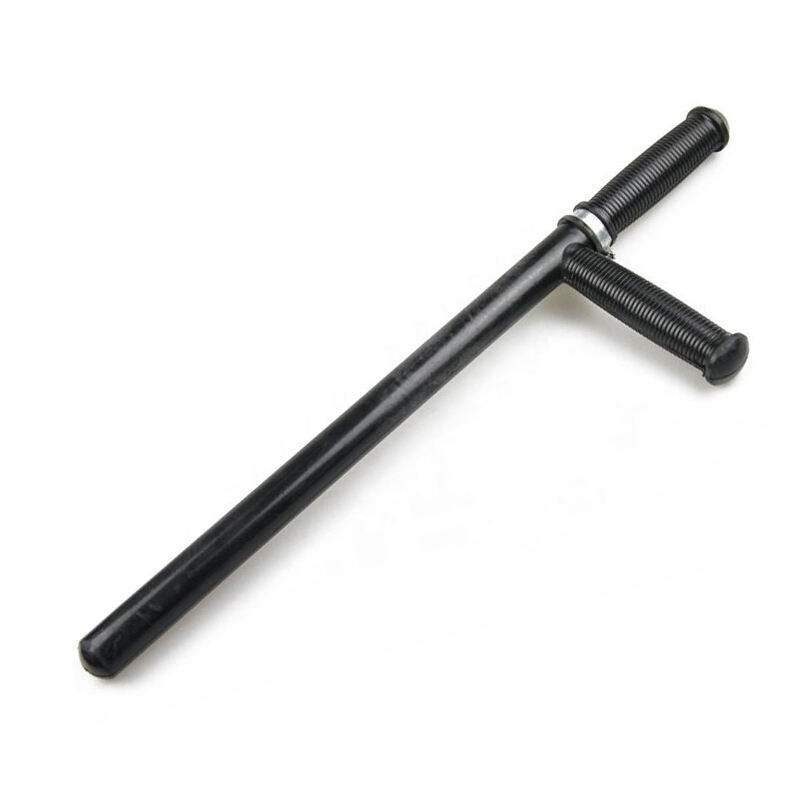
Expandable Baton vs Rubber Baton: Which One Fits Your Market Better?
Subtitle:
Understanding the differences between expandable and rubber batons for law enforcement, security, and wholesale procurement
When sourcing police batons for law enforcement, security operations, or wholesale distribution, buyers often compare expandable batons with rubber batons.
Although both are widely used in professional security environments, they are designed for different applications and offer different advantages.
Choosing the right type depends on your target market, operational requirements, and customer expectations.
For distributors and procurement buyers, understanding these differences helps improve purchasing decisions and ensures the right products are supplied for the right applications.
One of the most obvious differences between expandable batons and rubber batons is structural design.
Expandable batons are designed with telescopic sections that extend quickly during use and collapse into a compact size when stored. This makes them easy to carry while still providing sufficient reach when deployed.
Rubber batons, on the other hand, are fixed in length and usually consist of a rubber outer body reinforced by an internal steel tube or steel spring core. Their one-piece construction gives them a stable and durable structure with no moving parts.
This structural difference greatly affects portability and application scenarios.
Expandable batons offer better portability.
Because they collapse into a compact form, expandable batons are ideal for:
- Patrol duty
- Tactical carry
- Mobile security personnel
Their compact size allows officers or security staff to carry them comfortably on the belt while maintaining quick deployment capability.
For users who require mobility and fast response, expandable batons provide clear advantages.
Rubber batons offer simple and reliable performance.
Since rubber batons do not rely on mechanical locking systems, they are easy to use and highly dependable.
Their fixed structure provides:
- Immediate readiness
- Minimal maintenance
- Stable impact performance
This makes rubber batons suitable for:
- Crowd control
- Institutional security
- Standard law enforcement use
For buyers seeking reliable and low-maintenance equipment, rubber batons remain an effective option.
Another important difference is impact control.
Rubber batons are generally designed to deliver controlled force with reduced risk of excessive injury. Their rubber outer layer helps absorb part of the impact, making them appropriate for environments where controlled physical intervention is necessary.
Expandable batons, especially steel models, are more rigid and provide stronger impact force. This allows them to perform effectively in tactical or high-risk situations where immediate stopping power is needed.
Because of this difference, each product serves a different operational role.
Durability requirements also vary by application.
Rubber batons are durable in a straightforward way. Their steel-core reinforced structure provides good strength while the rubber exterior resists wear in routine use.
Expandable batons require more precision manufacturing because they include:
- Multiple telescopic tubes
- Locking mechanisms
- Release systems
When manufactured with high-grade materials such as 4142 alloy steel or 7075 aluminum alloy, expandable batons offer excellent durability. However, the internal locking system must be precisely engineered to ensure long-term reliability.
This makes manufacturing quality especially important for expandable baton performance.
The user experience is also different.
Expandable batons provide flexibility. Users can carry them in a compact state and deploy them only when necessary. This makes them practical for professional users who prioritize portability.
Rubber batons provide simplicity. They require no deployment action and are immediately ready for use, which is often preferred in fixed-duty environments.
The best choice depends on how the baton will be carried and used.
From a market perspective, different buyers often prefer different products.
Expandable batons are commonly favored in:
- Tactical markets
- Professional security
- Law enforcement patrol units
Rubber batons are often preferred in:
- Riot control
- Correctional facilities
- Public security departments
Understanding which market segment you serve is the key to selecting the right product line.
For wholesalers and distributors, offering both expandable and rubber batons can provide significant advantages.
It allows suppliers to:
- Serve multiple customer groups
- Cover different operational requirements
- Increase product line competitiveness
Instead of choosing one over the other, many successful buyers include both categories to expand market opportunities.
In today’s professional security market, buyers are looking for products that match operational needs rather than simply choosing the lowest-cost option.
Expandable batons provide portability and tactical flexibility, while rubber batons offer simplicity and dependable control.
Each has its own strengths, and the right solution depends on the intended application.
For procurement professionals, selecting the right baton type is not just about product preference—it is about matching the right tool to the right operational environment.